

As colder weather starts to visit regions of the state, Texans need to prepare their gardens and yards. A good rule of “green” thumb is the farther north you live in the state, the sooner you need to start preparing.
“Texans should start thinking about preparing their garden for winter in early fall, ideally; however, it’s not too late if they haven’t done so already. And now is even a good time to think ahead to spring,” said Michael Arnold, Ph.D., director of The Gardens at Texas A&M University and professor of landscape horticulture in the Department of Horticultural Sciences at the Texas A&M College of Agriculture and Life Sciences, Bryan-College Station.
Winter gardening: How to take care of your garden and lawn in cold temperatures
Arnold shared key actions Texans should take to prepare their gardens for the coming seasons.
1. Plant cool-season annuals
Remove spent annuals and plant cool-season annuals for winter color in your gardens.
“Annuals are a cost-effective way to add temporary color to your garden year-round by purchasing season-appropriate plants,” Arnold said. Also, you should immediately plant wildflower seeds, if you have them, he added.
2. Weed and clean
As we enter the winter season, many gardeners will find it is the perfect time to remove unwanted plants. Weeding now will minimize the work your garden requires in the other three seasons. Gardeners should also apply a pre-emergent herbicide, or weed killer, for cool-season weeds in landscape beds and turf areas, if desired.
3. Plant trees and shrubs
Late fall is the ideal time to plant woody plants so roots can be established before the heat of summer. The Texas A&M Forest Service has several web applications that provide good tree species options and recommendations for specific Texas regions and how to care for trees, including managing pests and diseases.
4. Prune trees and shrubs
As the weather cools and plants truly go dormant for winter, it is time to prune. Arnold recommends removing limbs on shade trees and overlapping branches on trees, setting scaffold branching on orchard plants and pruning shrubs that bloom on new wood by early February at the latest.
He cautions about the importance of being aware if a tree blooms on new wood, like crepe myrtle, or on old wood, like apple or pear.
“If you prune branches on plants flowering on old wood, you are taking off the buds that were set in the fall and will bloom in spring,” Arnold said. He suggested to “prune plants blooming on old wood immediately after they bloom.”
5. Plant grass seed
In some places, temperatures have cooled enough to over-seed turfgrass or spread grass seed directly onto your lawn without turning the soil.
“But that’s a double-edged sword,” Arnold said. “You may get nice, green grass even in the winter, but you need to be prepared to maintain it. Water while the seed germinates, then mow. So maybe think twice if you want to do that.”
6. Divide perennials and transplant true cool-season plants
Choose cool-season plants like pansies, snapdragons, dianthus, ornamental cabbage and kale. Keep in mind that annuals typically only last a season, whereas perennials can come back for years or even decades.
7. Consider planting winter vegetables
Many regions of Texas can get in one last late fall vegetable harvest. Now is the time to transplant cool-season veggies if you live in warmer parts of the state.
8. Use fallen leaves as mulch or compost
Fallen leaves make an ideal mulch or compost. In late fall, after the first few frosts and before the first hard freeze, Arnold recommends considering using those mulched leaves or shredded bark around the crown of tender perennials for protection.
9. Take cuttings of any tender, at-risk plants
If plants are sensitive to the cold, you might want to take cuttings to propagate and overwinter. Arnold recommends watching for cold nights and observing at-risk plants that may need to be protected. Light blankets or tarps may be placed on them overnight to protect them from frost.
10. Relocate potted plants that are not cold hardy
Potted plants have roots that will get colder than those planted in the ground, Arnold said. Be aware that plants brought indoors may drop their leaves in response to the change in sunlight but will then put on new ones. Tropical plants will need to be in a warmer area of a home with a sunny window, but other plants can be in a garage with a window or on a protected porch.
11. Visit your local public gardens
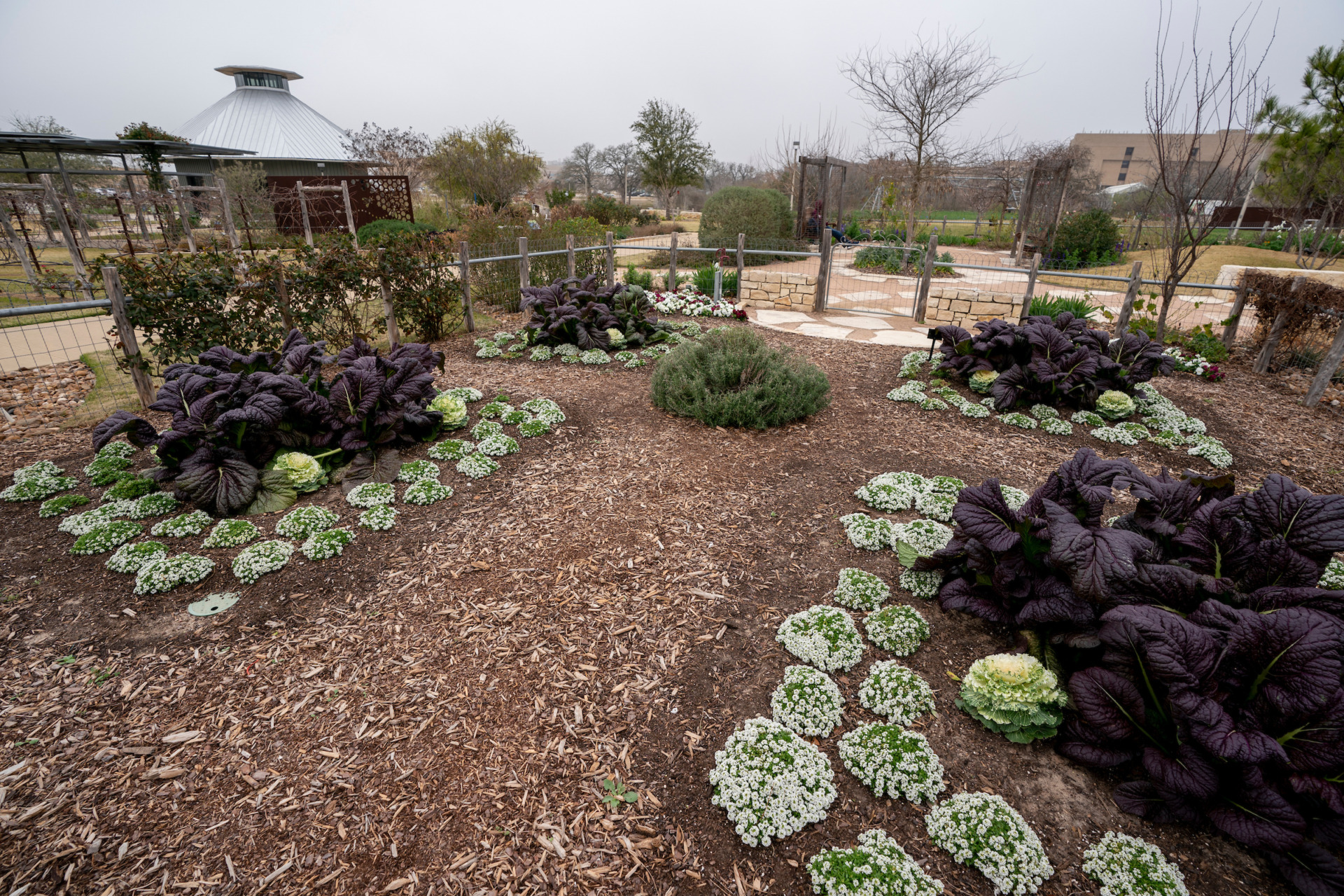
Now is the season to be inspired, Arnold said. He recommends a visit to local public gardens to take note of trees, shrubs and vines that provide fall and winter interest; consider planting them for future years.
“At The Gardens, we get all types of different forms and colors and textures from different plants to teach people what they can plant in their own garden,” he said. “With a little planning, you can create a garden that’s enjoyable for all four seasons.”
12. Clean tools and plan spring plantings
Winter is a good time to catch up on cleaning and maintaining tools like shears and lawnmowers, Arnold said. It gives gardeners time to repair and replace tools they won’t immediately need.
13. Prepare your pipes
Arnold said the single most important thing homeowners can do in advance of winter is to locate their drainage and cutoff valves to preserve and protect pipes and irrigation systems.
“Find your valves today and make sure you know how to turn them off.” Purchase or prepare insulation materials for exterior spigots and exposed pipes.
14. Think delayed gratification
Arnold said now is a great time to get some perennials into the ground and established before winter sets in.
“Long-term herbaceous perennials and bulbs need to be planted well before you want to enjoy them,” he said.
With bulbs, Arnold recommended refrigerating them for about six weeks to prepare them to be planted around mid-December, so they’ll be ready for spring bloom.
15. Be patient
Arnold said plants that may look dead may still be dormant come spring. As the weather warms, he said you can gently scratch the stem. If it is still green underneath, it’s alive.
“Be patient,” he said. “A little fertilizer, time and care can work miracles.”
Don’t hesitate to ask for help
Arnold encouraged homeowners to seek answers to questions they may have about anything garden and landscape related.

“There are so many resources available through the Texas A&M AgriLife Extension Service to help gardeners,” Arnold said. “If you have any questions, I recommend reaching out to your local county’s AgriLife Extension office because they can provide an answer or put you in touch with a horticulturalist familiar with your area.”
Similarly, if you are looking to get involved with gardeners from your area and join a community, he said Texas Master Gardeners could be for you.
“It is a wonderful, volunteer-based program run by AgriLife Extension. The volunteers are not only expert gardeners, but they have a wealth of knowledge about the plants of their specific region,” Arnold said. “They also offer learning events, workshops and have teaching gardens.”
Plan for the big picture
It is great that we’re getting people to think about winterizing their garden, he said, but we want to get gardeners thinking about spring now too, as well as their garden for the coming year.
“Ultimately, being knowledgeable enough to plan ahead means being able to optimize your garden,” Arnold said. “Most of Texas doesn’t have as well pronounced seasons as other parts of the country, so we can have the joy of gardening most of the year — with a little advance planning and preparation.”
