
Experts with the Texas A&M Natural Resources Institute (NRI) are working to connect Texans with the resources and expertise needed to address the growing challenge of feral hog management across the state’s rapidly changing landscape.
Managing feral hogs across a changing landscape
NRI is helping landowners and municipalities explore options to manage feral hogs and reduce the damage they cause in suburban and urban communities. The institute recently released a new publication, Managing Feral Pigs on Small Acreage Properties and Metropolitan Areas, designed to guide landowners and community leaders through the unique challenges of managing feral hogs on smaller properties and in developed areas.
Changing land trends see rural pest shift to urban intruder
Texas is home to eight of the 15 fastest-growing cities in the United States. Over the past 20 years, the state’s population increased from 19 million to 29 million and continues to grow. Over the last decade, feral hogs have increasingly appeared along the suburban edges of major cities such as Houston, Dallas, and San Antonio.
Texas currently has an estimated 2.6 million feral hogs. While landowners have long battled this invasive species in rural and agricultural areas, suburban and metropolitan settings create additional management challenges. Property size limitations, local regulations, and residential development make control efforts more complex and often restrict available management practices.
Feral hogs have expanded beyond rural environments and now impact developed communities across the state.
As residential and commercial development expands into former rural lands, more people with little experience managing feral hogs now face these animals on their own properties. City ordinances, county rules, and homeowners association restrictions often limit the tools available to control hog populations. NRI focuses on adaptive, science-based strategies that involve both landowners and municipalities to address these localized challenges.
NRI recently published its new educational resource to help landowners and community leaders identify management options and connect with available support. The publication targets those dealing with feral hog activity in suburban neighborhoods and metropolitan settings.
A threat to property, natural resources, and community health
Feral hogs cause extensive property damage, but their impact extends beyond torn lawns and destroyed landscaping. They damage streams and other ecological resources, disrupt natural habitats, and harm green spaces. They also spread diseases and parasites that can transmit to humans and domestic animals, creating additional public health concerns.
Suburban residents near San Antonio have already begun using NRI’s management resources. Local neighborhood wildlife committees have worked directly with NRI experts over the past year and a half to build coordinated approaches to feral hog mitigation. These efforts include in-person educational presentations, science-based recommendations, and ongoing access to management tools and expertise.
Helping landowners and municipalities build a management toolkit
Feral hog management in Texas involves multiple agencies, each serving a specialized role. However, success depends heavily on participation from property owners and community members.
As part of Texas A&M AgriLife, NRI supports both research and extension efforts. The institute conducts ongoing scientific studies while working directly with Texans to share research-based knowledge and promote responsible land stewardship. NRI educates landowners about effective control methods, demonstrates management techniques, and connects communities with services and programs designed to reduce hog populations and damage.
NRI works closely with neighborhoods and municipal leaders to build foundational knowledge and expand awareness of management options. These tools include trapping, removal programs, and the exploration of approved toxicants. Community involvement and municipal cooperation play critical roles in creating diverse and effective management strategies. In many cases, local policy adjustments help communities carry out actions such as trapping and organized removal efforts.
Through education, collaboration, and shared resources, NRI continues to bring Texans together to address feral hog challenges and reduce their impact across the state’s evolving landscape.
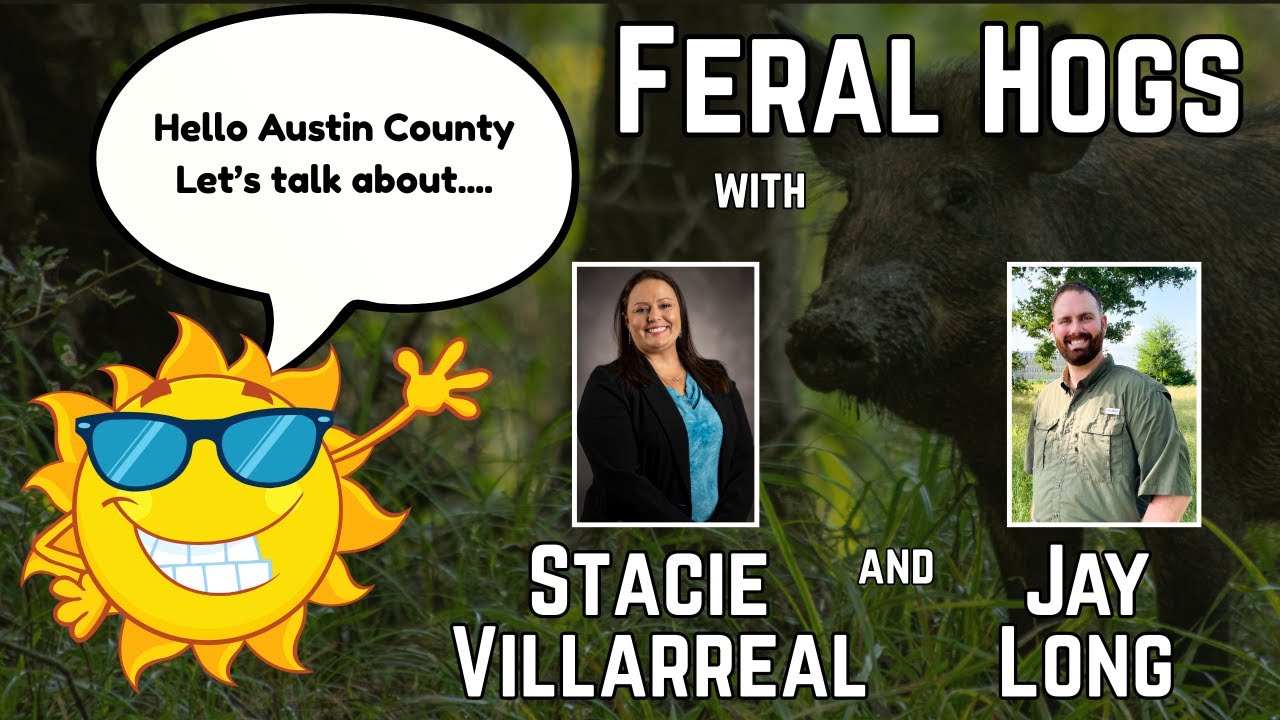
Below is the video of our visit with James “Jay” Long, Project Coordinator with the Texas A&M Natural Resources Institute, and Stacie Villarreal, County Extension Agent for Agriculture and Natural Resources with the Texas A&M AgriLife Extension Service – Austin County as they talk about feral hog management.