

Establishing fruit trees in Texas takes some effort, but these time-tested tips from a Texas A&M AgriLife Extension Service expert can guide the way.
Larry Stein, Ph.D., professor and Regents Fellow in the Texas A&M Department of Horticultural Sciences and AgriLife Extension fruit specialist, Uvalde, said planning now will help homeowners choose the right tree and take the correct steps to establish and care for it through the first critical years of its life.
Timing is everything, and winter is the time to plant
When it comes to fruit trees, Stein said to plant in late December through February. The key is that trees be totally dormant at planting.
Planting trees in early winter helps them establish some root growth before they break dormancy in the spring, Stein said. That initial root growth can make a big difference during harsh summer conditions.
“When people plant their fruit trees in the early spring, they may struggle because they haven’t initiated good root growth to help them absorb moisture and nutrients during a stressful summer,” he said.
Deciding what fruit tree to plant
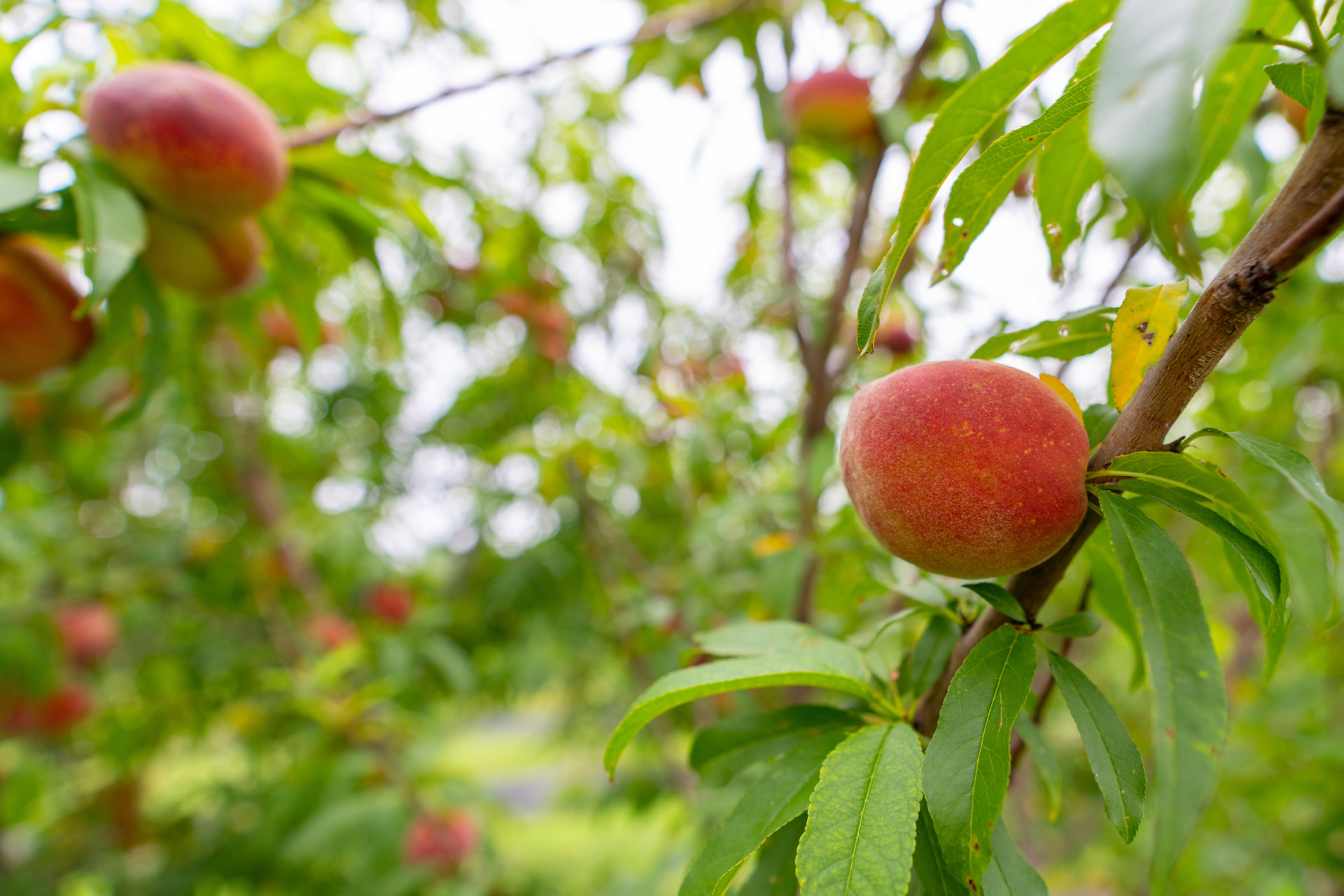
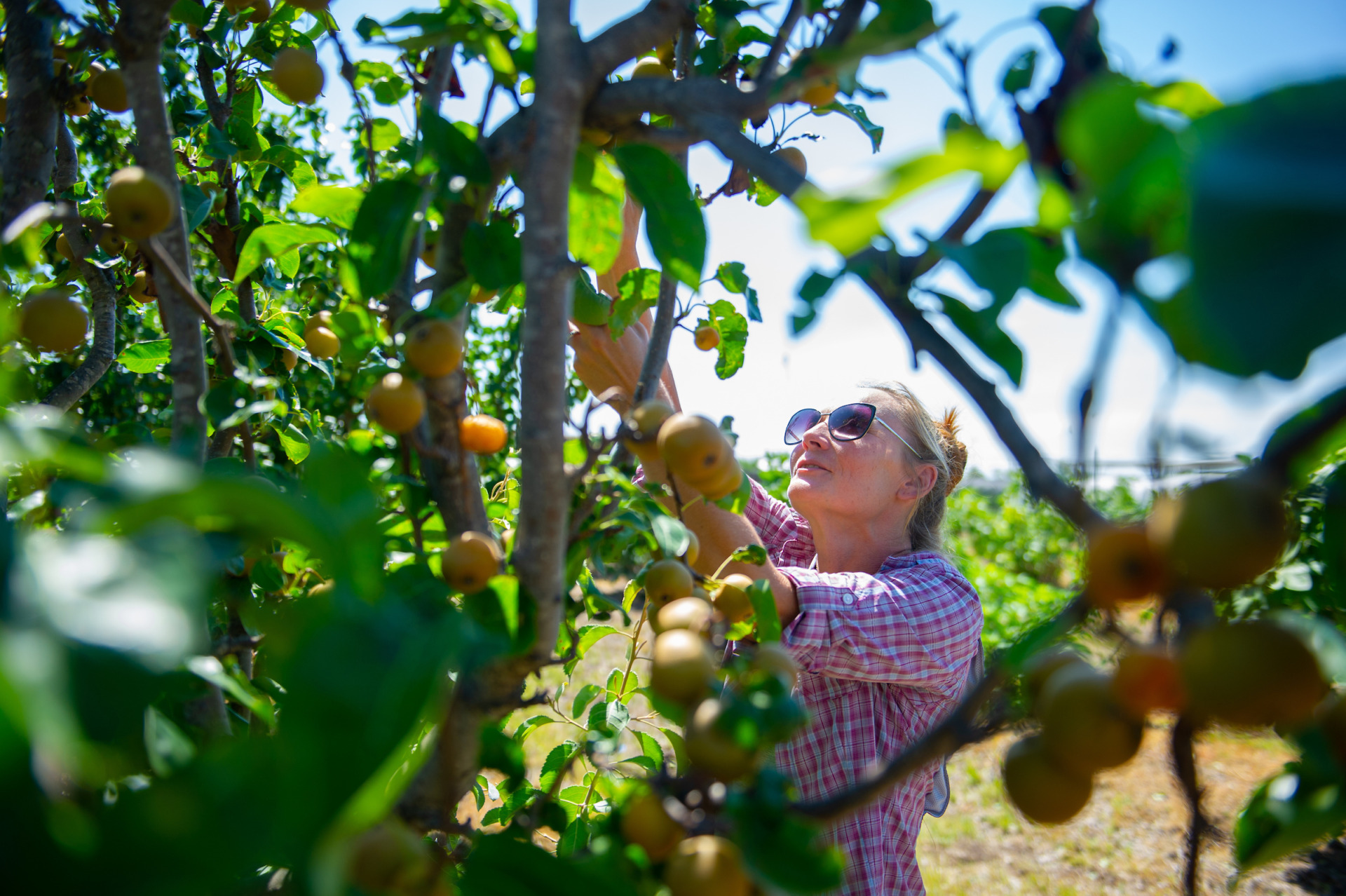
Picking the right tree variety for your location is the first and most important decision when transplanting fruit trees. Peaches are the most universally planted fruit tree in Texas, Stein said. Apples are hard to grow in Texas, and pears are the easiest.
“I suggest using the Aggie horticulture fruit site when choosing varieties,” he said. “It has comprehensive fact sheets on different crops and gives variety recommendations based on locations.”
Once you’ve narrowed the options, visit a reputable tree nursery and choose a medium-sized tree – 3-5 feet tall – so the recommended cutback at planting is less severe, Stein said.
Stein said he prefers planting bare-root fruit trees rather than container trees.
“They’re less expensive and will grow better,” he said. “The challenge is that bare-root trees are getting harder to find.”
Inspect the tree for injury or signs of stress, he said.
Check for gum coming out of the tree, any injuries to the tree’s cambium layer or other issues like crown gall, Stein said. Cut the tree’s roots to make sure they are a healthy white, and look for nodules, which could be root rot nematodes. Make sure the roots are not dry or wrapped around the tree’s base, which can lead to root girdling.
“If you find damage once you get it home or discover it’s irreversibly root bound or has other potential issues, take it back,” he said. “Don’t accept a subpar tree.”
Where to plant fruit trees
Soil that does not drain well can become a problem for fruit trees, Stein said. So, low spots or areas that stay saturated easily are not good transplant locations.
“You don’t want a spot where water ponds,” he said. “That can drown the tree.”
Stein said soil berms can be built up encircling the tree about 18 to 24 inches from the tree’s base to keep water at bay.
But low spots, even if they drain well, are not recommended because cold air settles there, Stein said. The tree’s location related to the property layout is another consideration.
Stein recommends placing the tree on the north side of the property so it stays cold during dormancy and dormant longer. Plant fruit trees in an area where they will avoid late-day sun, which can contribute to earlier bud breaks.
“We want the tree to stay dormant as long as possible to avoid tree or fruit damage from any potential late-spring freezes,” he said.
How to plant fruit trees
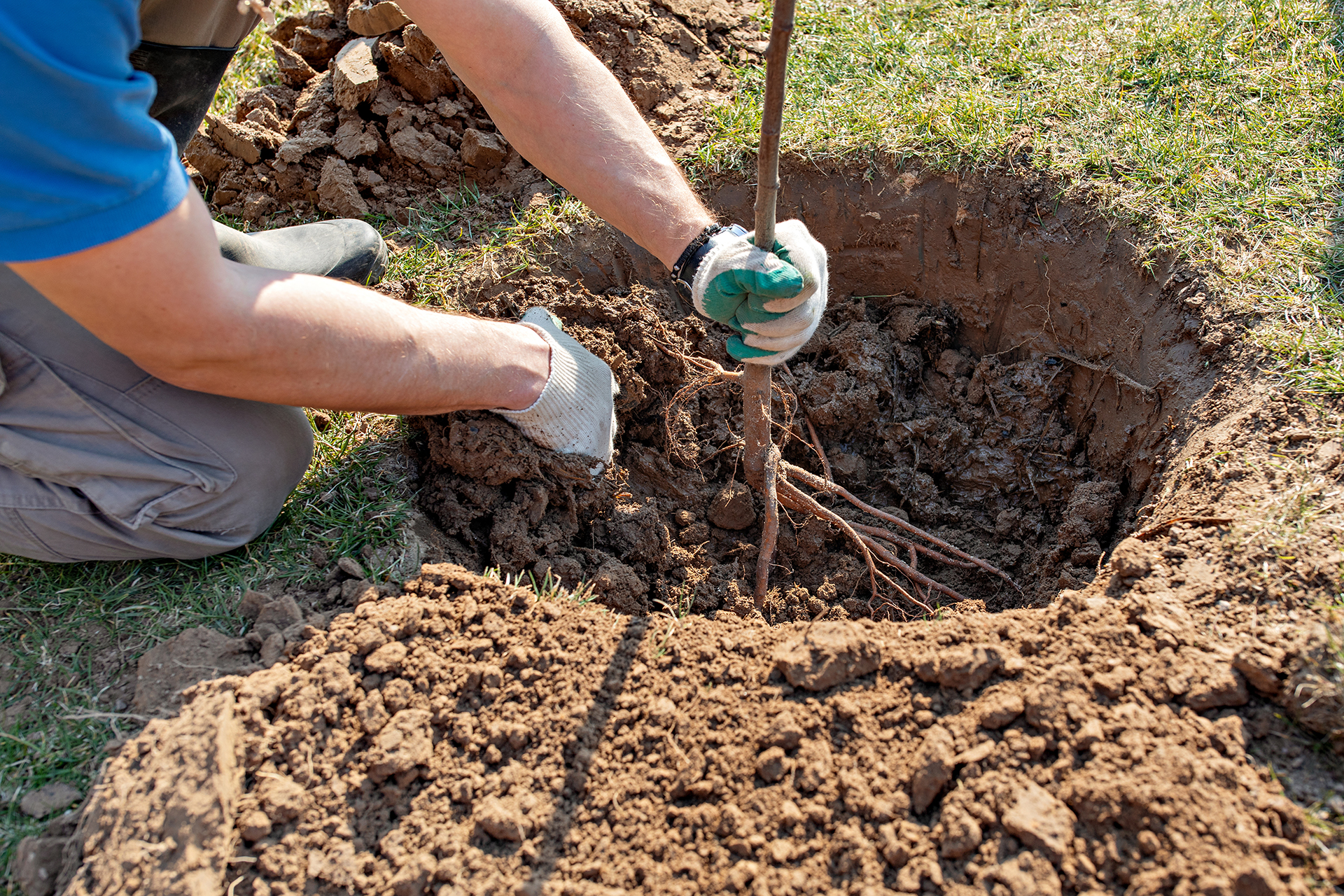
Before planting, knock off the soil around the tree’s roots, which, in container trees, typically includes peat moss and perlite or a light mix. Bare-root trees will not have any soil around the roots. Inspect the roots and cut them back if they are wrapped around the root ball to prevent the tree from becoming rootbound.
Dig a hole the size of the root system, typically 12-18 inches, Stein said. Dig it deep enough to plant the tree so that its root collar – the distinct line where the stem meets the root ball – is level with the ground.
“There is a distinct color change at the root collar,” he said. “You don’t want it to be any deeper than that.”
Fill in the hole with the original soil, Stein said. Water the tree well to settle the soil around the roots, and then cut the tree back hard.
Cut pecan trees back to 42 inches with all side branches removed to the stem. Fruit trees should be cut back to 18-24 inches and all limbs cut back to the stem.
“It goes against some recommendations, but the reduced root system and the cutback will force the tree to go into growth mode,” he said.
Weed- and grass-free zone
Stein recommends clearing weeds and grass from around the fruit trees for at least the first five years. This reduces competition for water and nutrients critical for the tree’s development.
Kill out or manually remove weeds and grass within a 2-3-foot diameter circle around the tree, he said.
“Use glyphosate or another herbicide that will kill all grasses and broadleaf weeds to the root,” he said. “It doesn’t matter how you do it. But you want bare soil around the tree to cut down competition for the tree.”
Make sure the herbicide does not contact tree leaves, he said.
Stein said grow tubes or aluminum foil could be used to keep the herbicide off the tree’s trunk when chemicals are applied. After the first year, mulch can be added within the circle to help weed control.
Don’t kill it with kindness
After proper transplanting, cutback and weed eradication, it’s important to leave the tree alone until it starts to actively grow, Stein said.
“It’s important to just let the tree do its thing. Most people kill trees with kindness at that point,” he said. “Watering is probably the No. 1 cause of death. Trees don’t need much water while inactive. They can go 4-6 weeks without water when dormant, and rain usually takes care of that.”
When the tree begins actively growing, keep it well-watered – typically once a week with 1 inch of water, depending on soil type, Stein said.
“When the tree is first planted, the water needs to be placed right around the tree,” he said. “As the tree grows, the roots move away from the tree. We think the best roots start at the canopy edge or drip line and go out about one and a half times the height of the tree.”
Fertilize, fertilize, fertilize
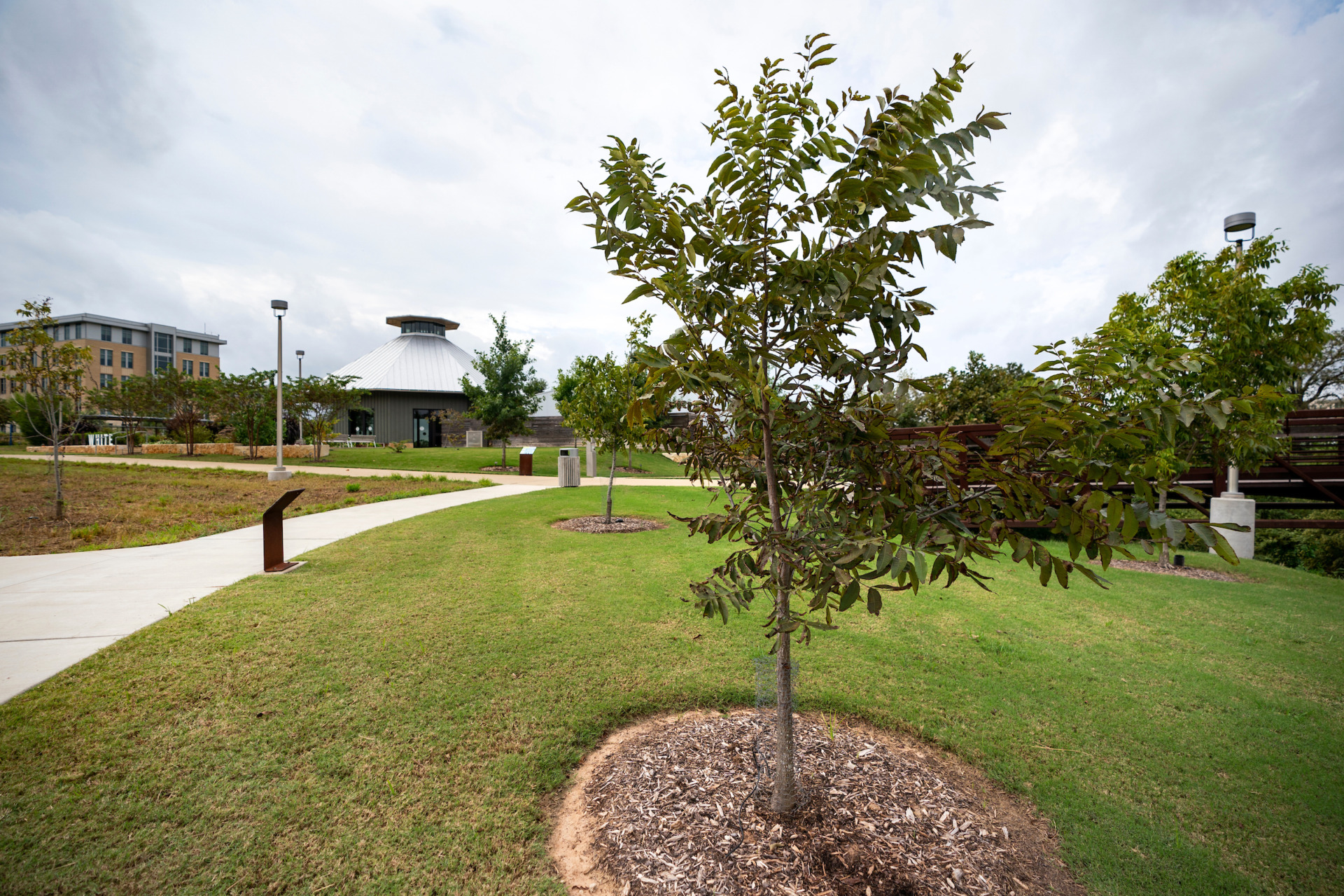
In May, after the tree shows 8-10 inches of growth, fertilize it with a cup of ammonium sulfate with 21% nitrogen. Organic 3% fertilizer can be used, but apply 7 cups to reach the 21% nitrogen requirement.
Water the fertilizer in 12-18 inches from the trunk of the tree, he said.
“The soil berm and weed-free zone can be useful to let you know where to spread the fertilizer,” he said. “You might want to put the fertilizer outside the berm to make sure it’s not too close to the trunk.”
Continue to water and weed around the tree and ramp up the fertilization regimen in year two with a cup of fertilizer in March, April, May and June, Stein said. In year three, double the fertilizer regimen with 2 cups of ammonium sulfate in those months to push the tree’s growth.
“Follow this regimen, and you will be amazed at the tree you can grow in three years,” he said.
Provide a half pound of 21% fertilizer per inch of trunk diameter at bud break in subsequent years for the life of the tree, Stein said. Give the tree another half-pound of fertilizer in May if it is showing a fruit crop. Do not apply the second round of fertilizer if the tree is not showing fruit.
“Those are really the recommendations for the life of the tree,” he said. “There are variety-specific training and pruning regimens we recommend in the fact sheets, and you’ll need to be aware of potential seasonal disease and pest issues, but that is a good start to well-established fruit trees in Texas.”
